Wednesday, October 28, 2015

New Recommendations Lead to More Confusion


What Matters Most? 
Last week, another ‘new’ recommendation about screening mammograms was announced.  
Another story hits the headlines telling women that they don’t need to have a mammogram, at least not until they are 45 years old and then at 54 only have their screenings every other year if “they expect to live till 65 years old.”  (If expected to live??)
The announcement was another reason for women to be confused about what they should and shouldn’t do.  
One more time when the headlines about screening raise questions about the value of mammography – confusion that could mean another woman’s life is lost.
Am I being too dramatic? Too alarmist?  
No.  I’m serious when I make that statement.  Delaying annual screenings can result in the loss of life.  It can also mean losing years of life that a woman could spend with her family and friends. It can also mean a totally different regimen of treatment—the difference between surgery alone and surgery with months of chemotherapy and radiation.
I read the entire announcement from the American Cancer Society with a heavy heart.  At least they did their ‘research’ right, and didn’t use the flawed studies that led to the United States Preventative Services Task Force’s proposed recommendations that tell women to postpone screening until age 50. (Recommendations that have not yet been accepted.)
The articles that supported the ACS recommendations talked about how they follow those currently used in other  developed countries, such as England, Canada, and Australia, which state that ‘screening women in their forties isn’t cost effective or a good use of healthcare dollars.’
No one has ever argued that screening younger women is ‘cost effective.’  At least not anyone in the breast cancer world I’ve worked in.  We’ve always known that fewer breast cancers per 1000 are found in women under age 50.  But what does ‘cost effective’ really mean?  And who defines ‘good use’ of healthcare dollars?  Especially if that forty year old is you or someone you love.
Another issue they discuss is the problem of false positives-those results that require women to have more testing after a screening mammogram. The idea that women are overwhelmed with anxiety due to false positives just doesn’t ring true.
In my book, The Women of The Rose, I talk about how the women I know aren’t unduly traumatized by having a follow-up test.  They want to know what’s going on with their breast and relieved when the area in question proves to be a benign finding. 
Of course, when mammograms are read by folks who know their stuff, the rate of recalls is low---and of those about half will have something that needs to be biopsied.  That’s when a follow-up test counts the most. I don’t know many women who would want to bank the rest of their lives on a 50/50 chance.  No, they’ll have the additional test and willingly.
Haven’t most of us had a lab test that didn’t come back in the normal ranges?  Either we had to have it repeated in a couple of months or they ran additional tests.  Even a simple urinalysis is accompanied by a ‘culture’ order if something shows up out of normal range.  At least if the doctor ordering the urinalysis in the first place is smart enough to add that note. 
I sure hope the national organizations with a lot more clout than The Rose continue to challenge that idea. Someone needs to. 
Thank goodness the American College of Obstetricians and Gynecologists, the American College of Radiology and the Society of Breast Imaging continue to support the recommendation of starting mammograms at age 40 and having one every year after that.
There is no doubt in my mind that women need to start screening at age forty—in fact at The Rose we will continue to recommend a baseline at age 35.  
Our experience and our statistics are absolutely clear:  one half of all of our women who are diagnosed each year are diagnosed under the age of 50.  Of the 325 we diagnosed last year, 157 fell in that range.  We know screening younger women works.   Thirty years of doing mammograms adds up to a lot of women and finding a lot of cancer.  We’ve seen the number of 40 year-olds being diagnosed rise with each passing year.  We know these women by name, met their families, comforted their children.  
Thirty years of watching too many women die because their cancers were found too late makes me livid when I hear of ‘new’ recommendations or ‘new’ studies advising women to postpone it.
We’ve also seen the value of doing mammograms every year, not every other year. 
This past February, one of our own was diagnosed.  She’s the first to tell you that if she’d followed the every other year after age 54, her cancer would have grown to stage 2 or 3.  She’s absolutely certain that annual mammograms work.  
I wonder how many times we’ll have to endure another ‘new’ recommendation.  I remember fifteen years ago when millions of women signed petitions against the USPSTF’s proposed recommendations downgraded screening for forty year olds.  Those signatures stopped the recommendations from being accepted which meant insurance companies had to continue to cover screening mammograms at age 40.
At the end of the day, isn’t that the real issue?  Even the American Cancer Society states that 40 to 44 year-olds should have screening mammograms if “they want to.”
Wanting to and having a test when insurance doesn’t cover it are two very different things. And it’s curious to me that preventative screenings which include mammograms are mandated to be covered by the Affordable Care Act.  I guess these new recommendations, along with others, could in fact wind up negating that law.
And no, this approach isn’t about “empowering” a woman to make that health decision for herself.   One premise being sported behind these recommendations is that they help a woman take her health in her own hands ‘after she’s discussed the pros and cons of having a mammogram against her risk factors with her personal physician.” 
I don’t know many women who have the luxury of having hat discussion with their docs anyway—at least not in the 7 to 10 minutes we get to spend with him or her.   Risk factors?  We’ve learned that being a woman is risk factor enough. 
But what I do know is that we don’t need another reason for a woman to not have annual screenings.  We don’t need another set of barriers.  She already has enough of those.  Between having no time for herself to not having enough money to spend on basics much less screenings that used to be covered, she has enough barriers.  
What she doesn’t have is a guarantee of life when diagnosed late.  No matter how personal the treatment or how good it is, early detection still gives her the best chances.
No matter how they try to spin it, early detection does matter. 
Mammograms matter. 
Women matter. 
In the end, I hope we remember what matters most. 

Thursday, October 22, 2015

Statement of The Rose Concerning ACS New Recommendations


At The Rose, we will continue to encourage women to have annual screenings starting no later than age 40. We concur with the "American College of Radiology (ACR) and Society of Breast Imaging (SBI) which continue to recommend that women get yearly mammograms starting at age 40."
We are deeply concerned that the recommendations released by the American Cancer Society will lead women to question the value of mammograms and the importance of early detection. 
Based on our clinical experience, we know women between the ages of 40 and 44 do benefit from screening. Over the past three years, 24% of all our diagnosed patients (398 of a total of 1659) were in the 40 to 49 year old range.  Of those 398 women, 173 fell in the 40-44 year old range.  But the most revealing and concerning statistic from our diagnosed population is that 40% of those in the 40-44 year old range were diagnosed at stage 2B and over—the majority of those had never had a mammogram or had not had annual screenings.
While we appreciate the process involved in ACS determining their new recommendations, we have to point out that the new ACS guidelines still support annual screening for women ages 40 to 44 who want it. 
Unfortunately, not every woman who wants a mammogram can have one, some battle against financial limitations and are not insured; others do not have a physician with whom they can discuss their risk factors and still others deal with no access to care because of transportation issues or lack of facilities offering mammography services—especially in areas of rural Texas. 
It should be noted that one-third of women who should be screened do not access these service, meaning that all necessary steps should be taken to ensure that women do not face economic or other barriers when their healthcare providers recommend screening. These recommendations provide more confusion and will incentivize insurance companies to not cover mammograms, which would mean that even fewer women would potentially be screened.
Based on our experience after 30 years of serving women, we absolutely believe that we must continue to encourage women to take care of themselves and have annual screenings.  We simply cannot afford to lose the ground we’ve gained over these many years with the advances in digital technology and widespread awareness.  Too many lives are at stake—especially young lives.  

Friday, October 10, 2014

NFL's "Crucial Catch" Breast Cancer Awareness Catches The Rose CEO's Attention

Reflections from Dorothy Gibbons after watching Houston Texans Breast Cancer Awareness game...

Watching the NFL players Thursday night decked out in their splashes of pink color made me pause. On the screen were big brawly men, running up and down the field, smacking into each other, sweat and testosterone dripping, yet there was no missing the hot pink shoes, gloves and helmet linings. 

The pink of course is to generate awareness about National Breast Cancer Awareness Month. It’s a major miracle that the NFL adopted this cause and color but the even greater miracle is that all the advertising last night supported the single action women can take in this battle against breast cancer – have an annual mammogram. 

People often ask me what has changed in the breast cancer arena over these 28 years that I’ve been running The Rose. My first answer is “people talk about breast cancer now.”  They didn’t 28 years ago.  Women didn’t want to admit to having it, many folks didn’t realize it ran in the family because Grandmother or Aunt Jane never talked about it, some folks thought it was contagious. The list goes on and on. 

Today, people are more open, more willing to share their journey.  Pink Ribbons are displayed on windows, hang from buildings and bracelets. NFL players wear pink.

The other thing that hasn’t changed is mammography is still the gold standard and early detection equates to longer survival.  Yes, treatment is better, much better.  Yes, we have more advanced imaging procedures, different diagnostic tools. 

But having that annual mammogram can make all the difference in the world in living a long and active life.  It is a decision every woman needs to make; it is truly something she can do for herself. 

Thousands of women understand the importance of annual mammograms but don’t have the insurance or resources to have one.  That is when The Rose levels the playing field.  Our programs make it possible for an uninsured woman to have her screening; she has the same advantages of the insured women. She has the same chance at survival and at winning in this game of life.

One other thing that is different today as opposed to 28 years ago:  The Rose exists and is serving more women in more counties than ever before.  

Monday, September 15, 2014

Quality Breast Health Care Isn't Just a Slogan ...

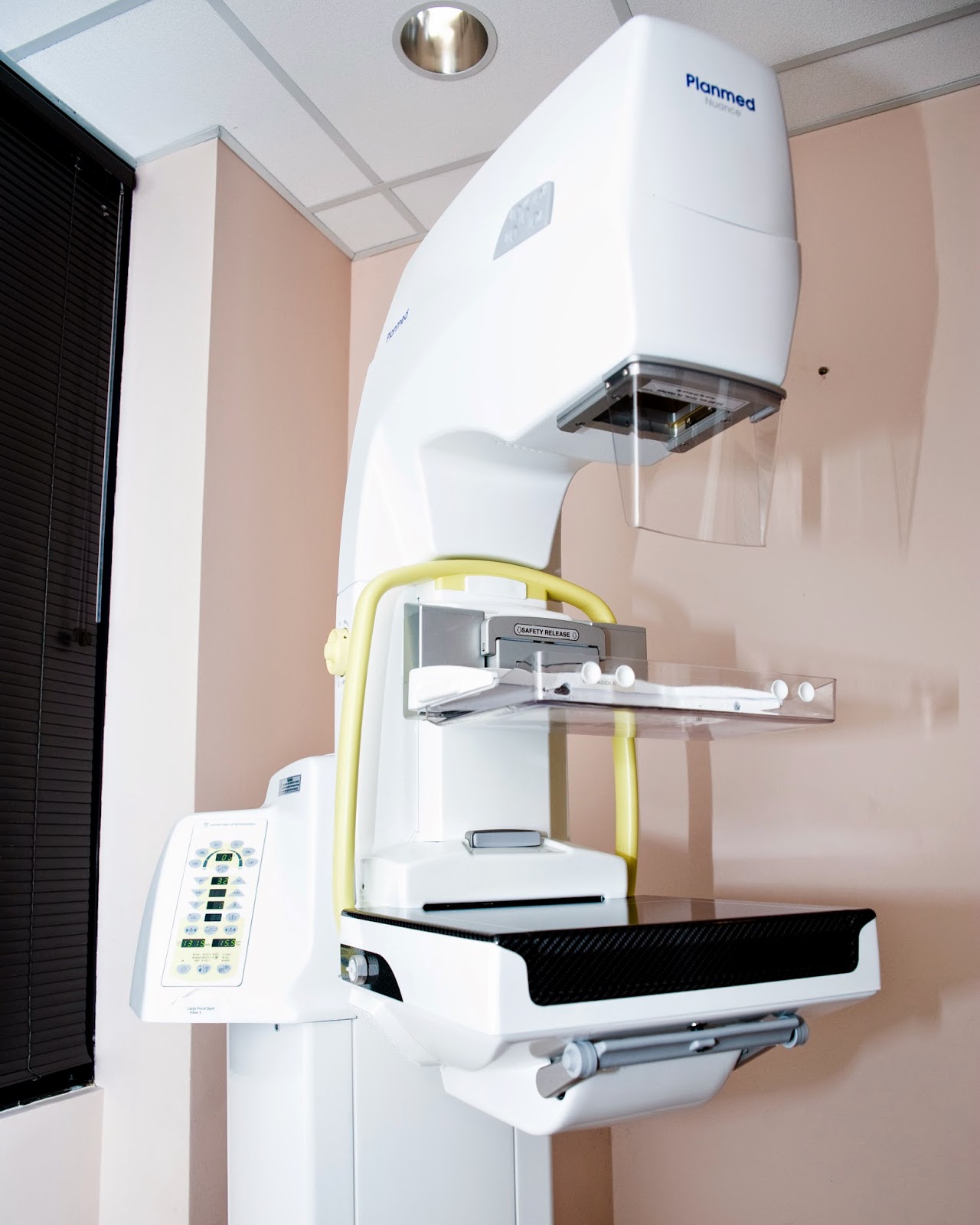
We passed with flying colors!!! The Texas Department of State Health Services recently conducted an inspection of The Rose's two imaging centers and our mobile program.  All of the digital equipment were inspected. In addition, technologists and radiologists credentials were verified and all quality assurance and quality control tests were examined and found compliant. Because no violations were found, The Rose was granted a certificate of inspection.
Here's a note written by Dorothy Gibbons regarding longtime staff member Amy Rigsby and her leadership of the praiseworthy team ...
Dear Team,
As I read the many emails of Congratulations to Amy and her team (most deserved!) about passing the annual inspections, it struck me that most of us don’t realize the full depth and implications of the state inspection. 
First of all, if we had not passed, we would be closing our doors today.  It’s really that simple and that serious.  
Imagine if The Rose were not able to care for 35,000 plus women each year. Imagine if we all were looking for other jobs.  Yes the annual inspection is a big deal!
But the most important part of every annual inspection is that it guarantees that The Rose has met the highest standards of quality in mammography.  
It takes a whole heck of a lot to pass these inspections year after year and if we don’t pass we can’t be accredited—which is the Gold Standard in our field!
Passing inspection with NO VIOLATIONS means the highest quality of imaging for our patients.  We should all be proud!
It means that the machines and the technologists running those machines and the physicians who depend on the quality of the films to ensure their accuracy have all met or exceeded every test and every requirement.
It means that we do not have any issues with radiation control. It means that all parts of the mammography systems function at their highest.  Most community based breast centers average 2 machines, we have 10!!  Each of those machines had to be tested and pass.  Most community based breast centers have one or two physicians reading, last year we had 10 different physicians, and our documentation for each of them and their qualifications had to be flawless!
It means the Technologists have kept current with licensing and continuing education units and are qualified to perform the studies. 
It means that every morning, before even the first patient can be seen, our Quality Control Technologists have to run tests, document the findings, evaluate the levels, all to be sure that our systems are within the regulations.  Not a single patient could be screened if any of our quality control measures are out of line.
In the Centers, those lead QC Techs are Paula Miller at The Rose Galleria and Laura Alcala at Featherwood.  Donna Fehl used to be the lead QC Tech for Mobile and now Ashlyn Henry is handling that role.  But all of the Mobile Techs have to do some part of the QC in the field, so many thanks to Tran Lam and Pepper Darnall also.
Even though she will have a fit with me for sending this email out to everyone; we need to recognize Amy who has taken us through over two decades of inspections—without a single violation! 
For all the ways you’ve made sure our patients receive the highest quality, thank you Amy!
Again…Congratulations to all!

Friday, February 21, 2014

Early Voting Underway -- Your Vote Matters

As CEO and Co-Founder of The Rose, Dorothy Gibbons has seen the impact of elections as she advocates for women's access to care. As a result, she is a strong proponent of exercising the right to vote. In that light, she wanted to share the following from the recently released The Shriver Report: A Woman's Nation Pushes Back from the Brink that looks at the lives of women on the brink (and beyond) of economic instability and proposes suggestions on what can be done.

In 2014, 36 states will choose their governors, and 33 Senate seats will be up for election as well as thousands of additional openings from the state legislature to the school board. And in 2016, the nation will choose a new president. All of these elections create an opportunity for women voters to gain commitments from our political leaders to finish the undone work, including: expanding family and medical leave; ensuring high-quality early care and education for all children; and eliminating the wage gap so that these policies become an everyday reality for all women and their families. Voting is one of the simplest yet most powerful ways to create local as well as national impact. -- The Shriver Report: A Woman's Nation Pushes Back from the Brink

Mammography Matters - An Op/Ed from Dorothy Gibbons

After almost 30 years of providing breast health services to more than 400,000 women, I can state the following without a single note of hesitation: Mammography matters.
That statement should be read as emphatically as possible within the confines of print.  I say it as CEO of The Rose, Houston’s “go to” resource for breast health care and the provider of much needed care in 25 counties.  When Dr. Dixie Melillo and I founded The Rose in 1986, we were clear about our nonprofit mission.  We had seen far too many women come for “treatment” in such late stages that all we could do was hold their hands until death took them.
Mammography matters. I say that to family, friends— any person I love— because I want their cancer found at its earliest possible stage and for them to have the best possible outcomes with the least amount of treatment.
Mammography matters. I say it as a woman who cannot fathom being told that something potentially malignant, such as DCIS, could be found in my breast and left there because it was deemed “acceptable since it’s non-invasive.” 
With my long history, I’m familiar with the uproar often caused when a “study” questions the value of an annual screening.  The British Medical Journal fanned the flames of debate last week when they published a report out of Canada questioning the value of a mammography screening and suggesting that a physical examination was adequate.
Mainstream media wasted no time in including rebuttals to the findings with experts noting that both the study’s information gathering and conclusions were “obviously flawed”. Unfortunately, inflammatory headlines often take on a life of their own in social media as they are retweeted and shared. Soon the headlines— not the facts—become the news.
The Canadian study immediately drew fire from the American College of Radiology (ACR) and the Society of Breast Imaging (SBI): 
"[The article] provides an incomplete picture of the costs versus benefit of breast cancer screening programs and is misleading. The costs of morbidity, lost income, treatment of metastatic disease, death, and other real financial implications associated with a diagnosis of advanced breast cancer due to less frequent screening were not considered in [this] analysis."
The groups also noted that if guidelines for less frequent mammograms were followed, approximately 6,500 to 10,000 additional women in the U.S. would die each year from breast cancer. One physician remarked, “We can't talk about how many dollars we'll save without also talking about how many lives we're going to lose.”
I agree.  We cannot place a price tag on a woman’s life. 
Until there is a cure, The Rose will continue to promote and provide mammograms.  We will continue to focus on the importance of preventive health screening.  We felt pretty helpless back in 1986 when insurance didn’t cover screening mammograms, few physicians recommended them and awareness about early detection was zilch. Then, as now, we tackled each challenge to access, and, one woman at a time, made mammograms affordable and accessible to any woman—insured or uninsured.
As a result, The Rose has seen a reduction in the stage of breast cancers diagnosed at our centers and through our mobile programs—especially among our uninsured population—mainly because we are returning to those populations and providing annual or semi-annual screening. 
How sad, that after nearly three decades, the controversy continues. With so many demands on their time and attention, women don’t need any reasons to delay screening; they need encouragement.
So, again I say, because women matter, mammography does indeed matter.


Dorothy Gibbons is CEO and Co-Founder of The Rose, the nonprofit breast health organization for southeast Texas which includes two imaging centers and a mobile fleet reaching 25 counties. 

Friday, January 31, 2014

Another Reason Why ...

Two things that do not mix well – ice and Houston roadways.

Two more things that don’t do well together – rolling out our Mobile Program to more corporate offices on the same week ice is predicted on Houston roadways.

If ever there were a good week to ask, “Why?” …

AND YET … as I knew they would, The Rose staff “rose” to the occasion.

Imagine the scene: It’s Monday and two of our Mobile Team members Lilia and Donna are taking care of Cyberonics employees in record time. I know this because Karen, who is part of our Communications staff, was live tweeting the day and she actually timed one patient as less than 15 min.  (By the way, I NEVER thought I would use the word “tweeting” in a sentence.) Meanwhile, Cindy, the manager of our Mobile Team, is back at our Featherwood location juggling calendars and sites who were already letting us know they were closing for the next day’s anticipated ice storm. In between patients, Donna calls to see if they can stay late to cover the women who were supposed to be on the docket for Cyberonics second day of screenings. That’s when she finds out Thursday just opened up. So now Lilia is notifying Kim at Cyberonics who is reaching out to her staff to make Tuesday become Thursday!

Are you still with me?

Even though the teams can’t go out on Tuesday, Donna finds time to do a bit of breast cancer awareness.  She builds an ice man and the tweet of that little pink-ribbon wearing creature got retweeted by our local weatherman!

Now we get to Wednesday and a very COLD morning. When I arrived early(before 6 AM), I see three sets of the Mobile Team all bundled up and overcoming hard to open doors and frozen lifts and loading equipment in less-than-ideal-conditions. What I didn’t know is that they’ve already had to use jumper cables on one of the vans to get it to start!

As Cindy told me later, “When push comes to shove, they truly are a team – they all waited on each other and made sure each other was okay and knew the routes to take since the HOV lanes were closed.”

Since United Airlines was on the books on Wednesday and it was the first time we were going to the downtown offices, we really wanted to make a good impression. Well … no worries! This “true team” netted praise throughout the day via emails and on Facebook …

It was really a great day – people genuinely appreciated the convenience of getting it done at work in just a few minutes.  I never dreamed it would be so popular! – Amy of United

Thank you for arranging for The Rose to come to the office and do mammograms. Walking back and forth between Jefferson and Smith took longer than checking in and completing the mammogram. Definite productivity saver instead of taking time from work for an appointment elsewhere. – Susan in email to organizers Amy and Debbie at United

One more "brag" on The Rose Houston and their mobile unit....if you have the good fortune that your employer schedules this event...please take advantage. I was in and out in 15 minutes and Donna the RN was friendly and made you feel comfortable. There are no more excuses not to take care of you! OK, off my soap box now! – Bobbye 

Thursday the Cyberonics rescheduled day not only went well, it also provided us with the opportunity to photograph and hear from their CEO Dan Moore who will be speaking at our April luncheon this year. After seeing firsthand his employees’ positive response to having the mobile onsite and hearing about our dream of having a fleet of mobile units caring for women across Texas, he offered several great suggestions to help us better communicate with corporate leaders.

As Karen, who had interviewed Dan for an upcoming story, recounted their discussion to me, I had to smile. I remember back to the day when I first told her to use “fleet” when talking about our vans. Karen paused and I knew she was questioning whether three vans could really be called a “fleet.” But as soon as I shared the dream of reaching counties where they have NO ACCESS to breast health care and breaking down barriers like those of convenience that often keep women from making the preventive appointments we know will save lives, she understood. And she’s used “fleet” ever since.
 
I love to dream. I love it even more when dreams start to seem like reality.

And this dream is shaping up. With people like Amy and Debbie at United, Michelle (our board member who connected us to Cyberonics), as well as Kim and Dan supporting us, I believe that our expanded fleet will be needed sooner rather than later.

So thank you to our great mobile team -- Amy, Cindy, Adriana, Ana, Donna, Kemper, Lilia, Maria, Pepper, Rosa, Tabitha, Tran, and Tressa.

You ALL warmed my heart this week. And that’s the best way to get through a cold week in Houston! 
 
Dorothy Gibbons is the Co-Founder and CEO of The Rose.